How SAP IBP, PP/DS, and SAP Joule Are Driving Supply Chain Transformation
A senior view of how planning architecture, detailed scheduling, and intelligent assistance can work together in modern SAP programs.
In this article
- How SAP IBP, PP/DS, and S/4HANA planning should work as one architecture.
- Where SAP Joule and intelligent assistance can help planners navigate exceptions.
- Why transformation roadmaps should begin with planning decisions, not tool selection.
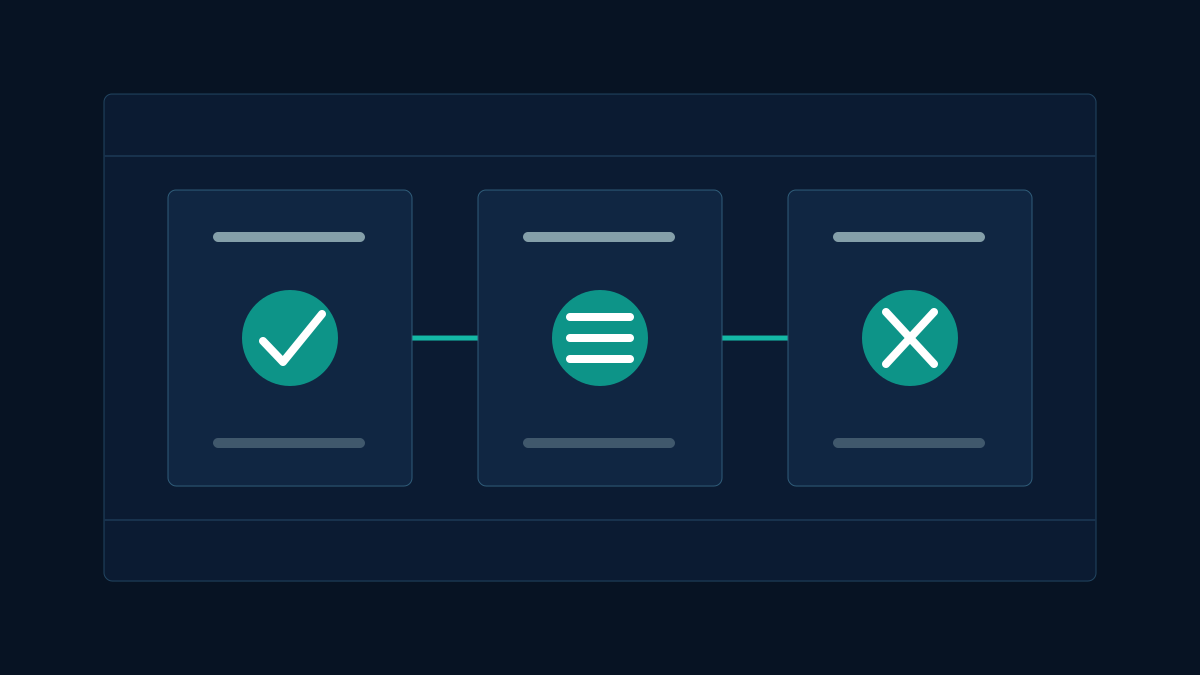
SAP planning transformation works best when SAP IBP, PP/DS, and S/4HANA planning are treated as an integrated planning architecture rather than separate technology workstreams. Each capability has a role, and the business value depends on how cleanly those roles connect.
SAP IBP can provide the executive planning layer for demand, supply, inventory, and scenario review. PP/DS can support more detailed production planning and scheduling decisions where constraints, sequencing, and finite capacity matter. S/4HANA provides the operational foundation that turns planning decisions into executable supply chain activity.
SAP Joule and other intelligent assistance capabilities add a new dimension. Their role should be practical: helping users interrogate planning signals, summarize exceptions, navigate workflows, and understand decision impact faster.
The risk in transformation is overdesign. A strong roadmap starts with the planning decisions the organization must improve, then maps process, data, integration, governance, and adoption around those decisions.
The future of SAP planning is not a single tool. It is a governed planning ecosystem where executive planning, detailed scheduling, automation, and decision support operate with a shared logic.
Need a practical perspective on SAP planning, AI-enabled forecasting, or clinical trial supply chain?
Start a Conversation