Your de-facto Supply Chain solution specialist
How SAP IBP, PP/DS, and SAP Joule Are Driving Supply Chain Transformation
Explore how SAP IBP, SAP PP/DS, and SAP Joule work together to improve demand planning, detailed scheduling, decision-making, and end-to-end supply chain transformation.
Aniruddha Biswas
3/22/20264 min read
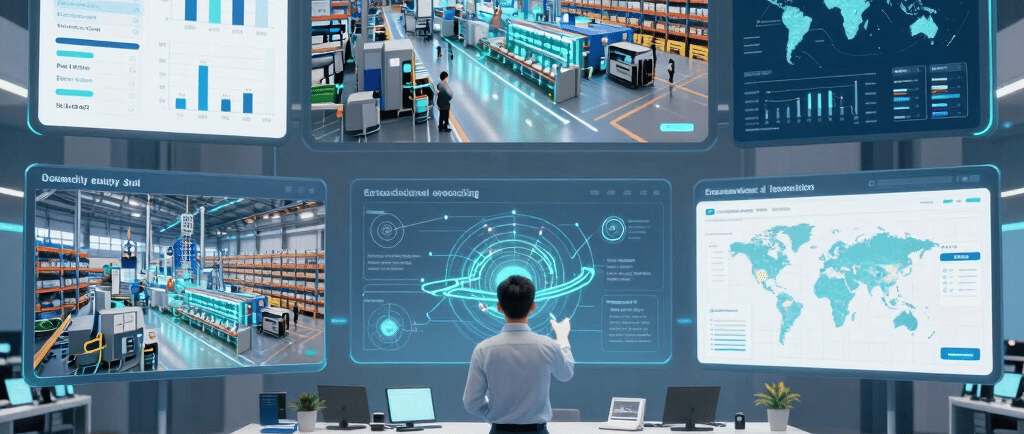

From Planning to Transformation: How SAP IBP, PP/DS, and SAP Joule Can Reshape the Supply Chain
Supply chain transformation does not happen just by adding another dashboard or another planning run. It happens when strategy, demand, supply, and execution start working as one connected system. That is why the combination of SAP Integrated Business Planning (SAP IBP), SAP S/4HANA Production Planning and Detailed Scheduling (PP/DS), and SAP Joule is so important. SAP IBP brings together S&OP, forecasting and demand, response and supply, demand-driven replenishment, and inventory planning, while SAP S/4HANA Manufacturing for planning and scheduling adds embedded advanced planning, constrained planning, detailed scheduling, and exception-based planning. Joule adds an AI layer designed to help teams act across connected workflows.
At a high level, each solution plays a different role in the transformation journey. SAP IBP is strongest at network-level planning: balancing demand and supply, running simulations, improving forecast accuracy with AI-powered algorithms, and creating multilevel supply plans across locations and bills of material. PP/DS is strongest at operational reality inside the plant: finite planning with exact times, bottleneck-aware scheduling, pegging, and optimization of sequencing and capacity. Joule fits across those layers by helping planners understand results faster, investigate issues, and move from raw system output to clearer decisions.
Why this combination matters
Many supply chains still suffer from a familiar problem: demand planning is done in one place, supply planning in another, and plant scheduling somewhere else. The result is delay, rework, and planner frustration. SAP IBP is built to improve responsiveness with analytics, what-if simulations, alerts, and AI-supported forecasting and supply planning. SAP’s response and supply planning capability specifically supports constrained, decision-centric supply plans and multilevel planning across the network.
That network view alone is not enough. At some point, supply chain transformation has to land on the factory floor. PP/DS is designed for finite planning with exact times for in-house production and external procurement, and it is typically used for critical products and bottleneck resources. SAP’s learning content also highlights benefits such as better resource utilization, reduced stock, improved delivery reliability, exact-time planning, and optimization to reduce setup times and delays.
Joule changes the user experience around both planning layers. SAP describes Joule as an AI solution intended to help teams act with clarity, improve decisions, and speed up end-to-end processes across SAP and non-SAP systems. In SAP IBP, SAP says generative AI can analyze supply planning run logs, explain issues, suggest resolutions, and compare runs. In PP/DS, SAP’s Joule capabilities indicate it can help monitor and manage products, resources, receipts, and shortages.
A practical end-to-end planning model
A strong transformation pattern starts in SAP IBP. Demand planners use forecasting, demand sensing, and S&OP capabilities to create a more reliable view of future demand. Supply planners then use response and supply planning to create feasible plans that account for constraints, inventory targets, and network-wide trade-offs. Because SAP IBP supports scenario simulation, planners can compare options instead of relying on a single static plan.
From there, the plan needs to become executable. SAP states that after source production plant and planned order quantities are determined in IBP, a handover process converts them into scheduling orders that SAP S/4HANA can sequence. SAP also highlights real-time, bi-directional data transfer between SAP S/4HANA and SAP IBP through standard integration cycles. That connection is where transformation becomes real: the tactical plan no longer stops at the spreadsheet level but flows into operational scheduling.
Inside the plant, PP/DS adds the operational precision that many transformations miss. SAP describes it as planning with exact times in hours and minutes, with enhanced capacity planning, pegging, standard heuristics, and optimization procedures that can minimize setup times, setup costs, and scheduling delays. SAP’s product page for manufacturing planning and scheduling also emphasizes constrained planning, detailed scheduling, and optimization of machine, labor, and tool capacity.
Now add Joule to that flow. Instead of asking planners to manually decode logs, compare runs line by line, or search multiple apps to find shortages and receipts, Joule can help interpret planning results and surface relevant information more quickly. In practical terms, that means a planner can spend less time navigating the system and more time deciding whether to expedite supply, shift production, change priorities, or rerun a scenario. That is a meaningful shift from transaction-heavy planning toward decision-centric planning.
What supply chain transformation looks like in this model
The real value of combining SAP IBP, PP/DS, and Joule is not just automation. It is alignment. SAP IBP helps align commercial demand, inventory targets, and supply options across the network. PP/DS aligns that plan with actual production constraints and sequencing logic. Joule helps people interact with the planning stack more naturally and understand exceptions faster. Together, they support a more connected operating model from S&OP down to executional planning.
This also changes the role of the planner. The planner is no longer just adjusting dates and quantities manually. The planner becomes more of a decision orchestrator: reviewing scenarios, managing trade-offs, validating constraints, and responding to disruptions. SAP’s own positioning around IBP and manufacturing planning emphasizes analytics, simulations, exception-based planning, and higher-value analysis rather than pure manual effort.
For organizations pursuing supply chain transformation, this matters because transformation is usually less about buying one more tool and more about reducing fragmentation. When demand planning, supply planning, production scheduling, and AI-assisted analysis are connected, companies can react faster, improve delivery reliability, optimize service-cost-capital trade-offs, and create a stronger foundation for resilience. Those outcomes are consistent with SAP’s stated benefits across IBP and PP/DS, including responsiveness, better forecasting, constrained planning, delivery reliability, and improved resource utilization.
Final thoughts
SAP IBP, PP/DS, and SAP Joule should not be seen as separate conversations. They are most powerful when treated as one transformation story. IBP shapes the network plan. PP/DS makes the plant-level plan executable. Joule helps people move faster through complexity. The result is not simply a digital supply chain in theory, but a more responsive, constraint-aware, and intelligence-enabled supply chain in practice.
For companies serious about supply chain transformation, the opportunity is clear: connect strategic planning, tactical supply balancing, detailed scheduling, and AI-assisted decision support into one operating model. That is where technology stops being a set of modules and starts becoming a competitive capability.